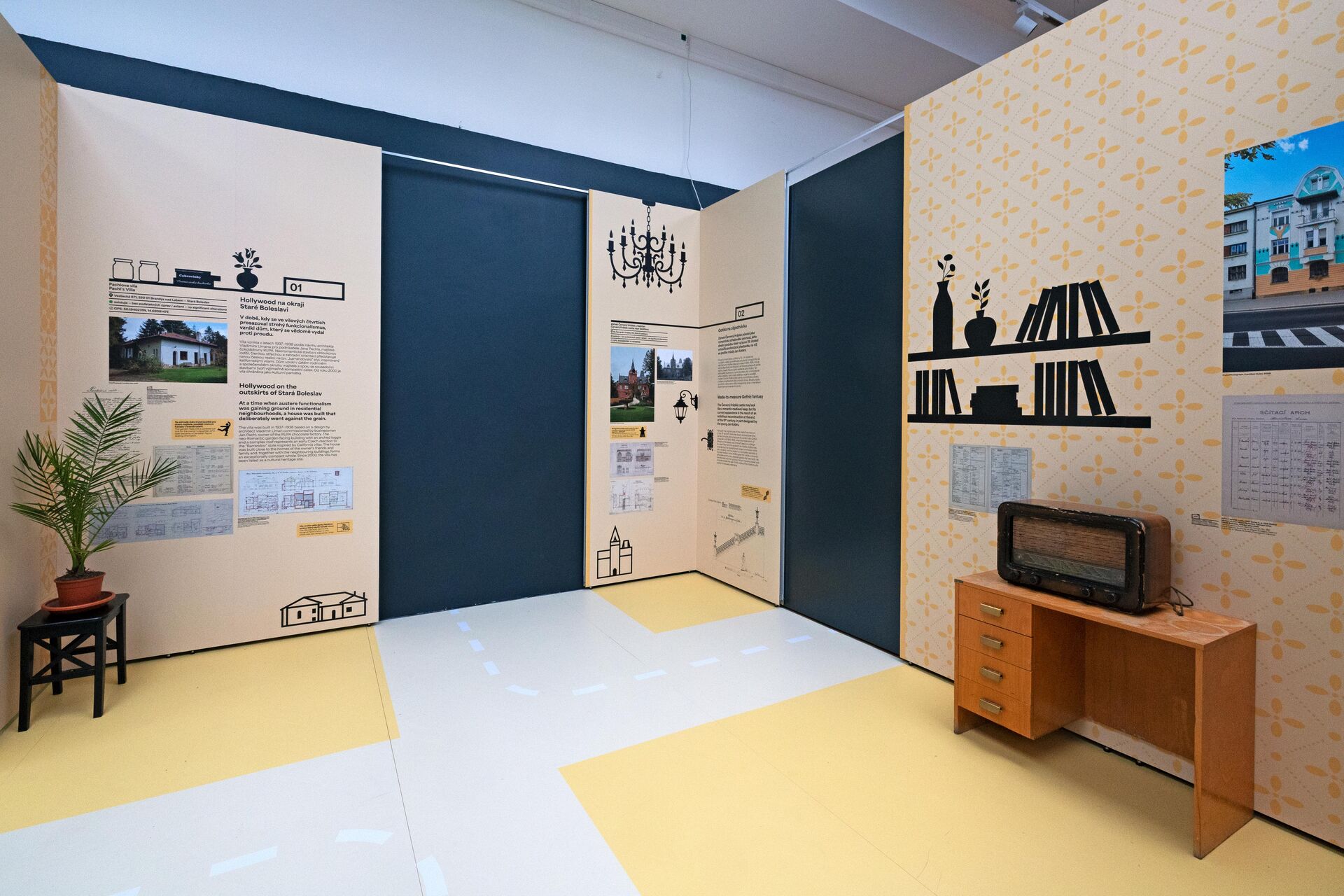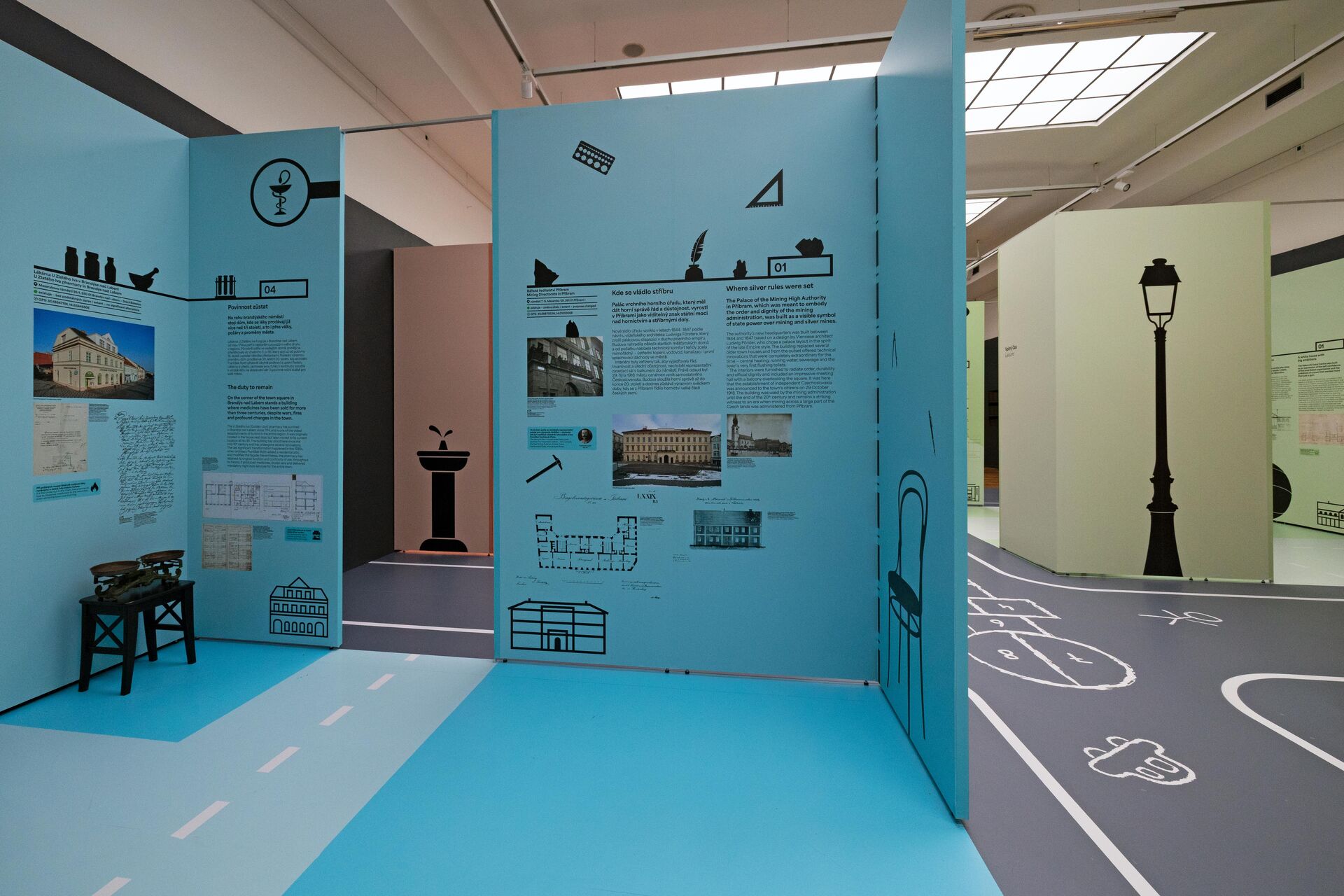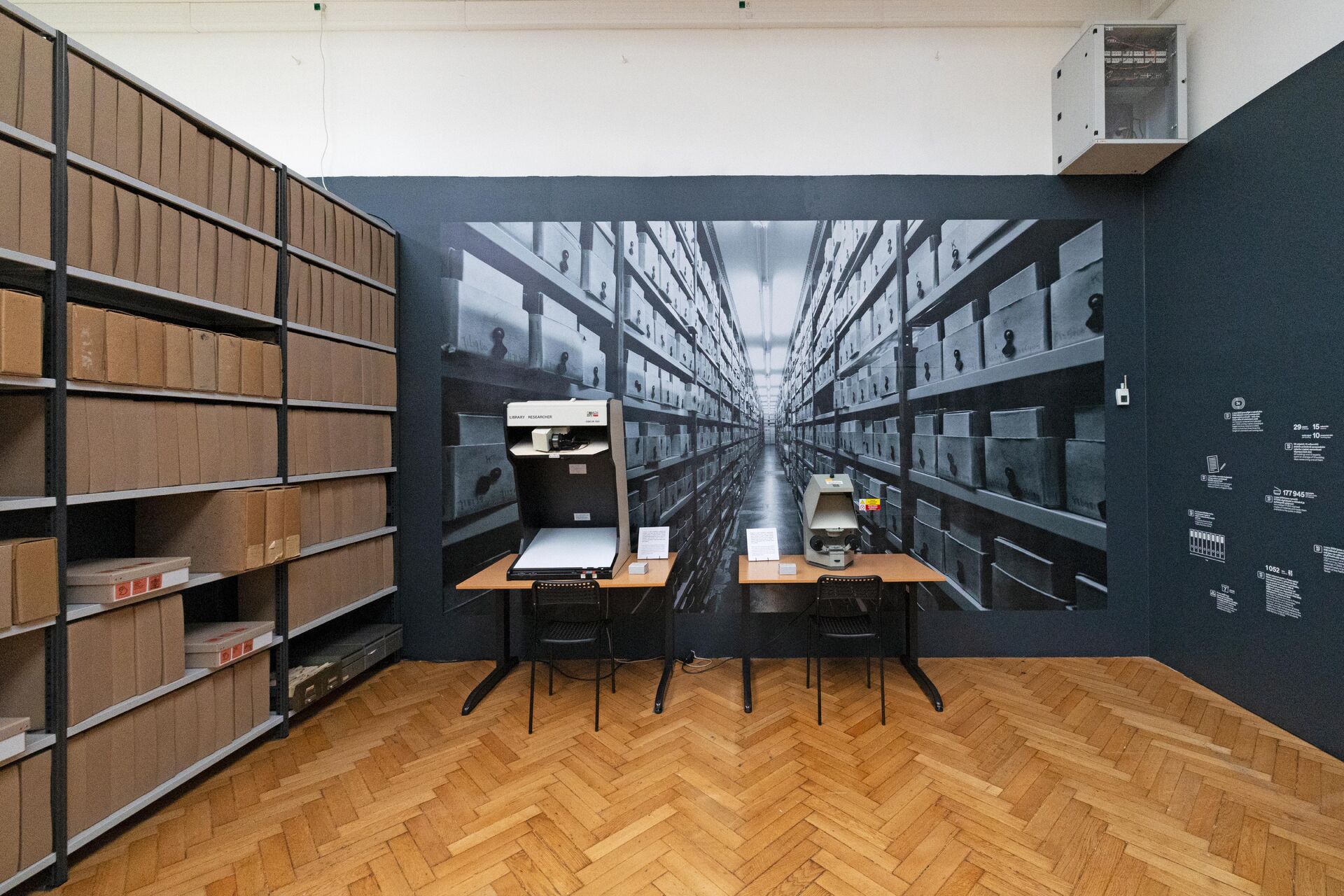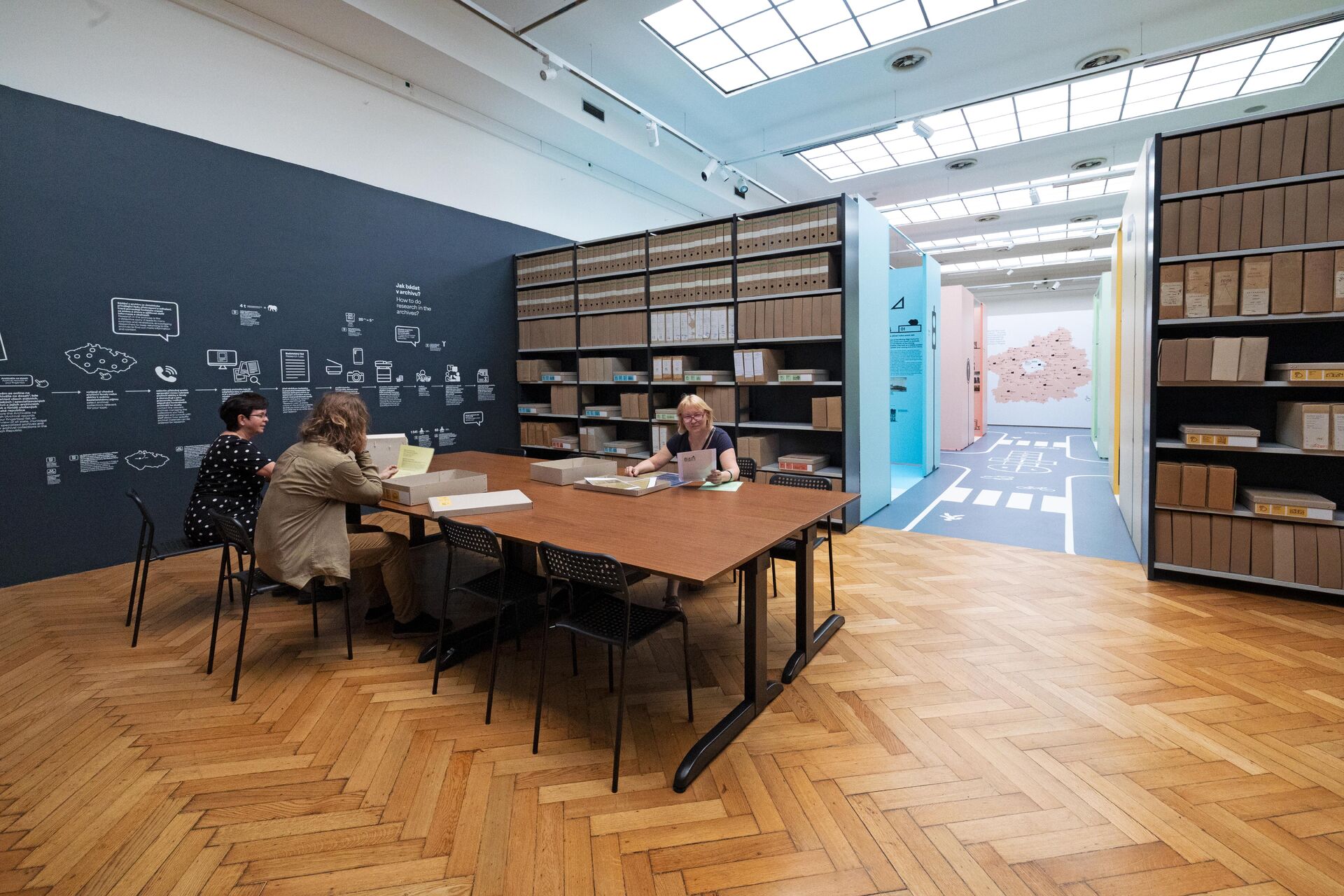

The exhibition of the National Technical Museum and the State Regional Archive in Prague presents the stories hidden in houses, as told by archives.
It introduces visitors to the possibilities of archival research and shows how the basic information about a specific property can be traced step by step. Through a wide range of archival sources, it presents the building and ownership development of various types of properties, while also showing that researching the history of houses can reveal broader stories as well — social, cultural, and economic.
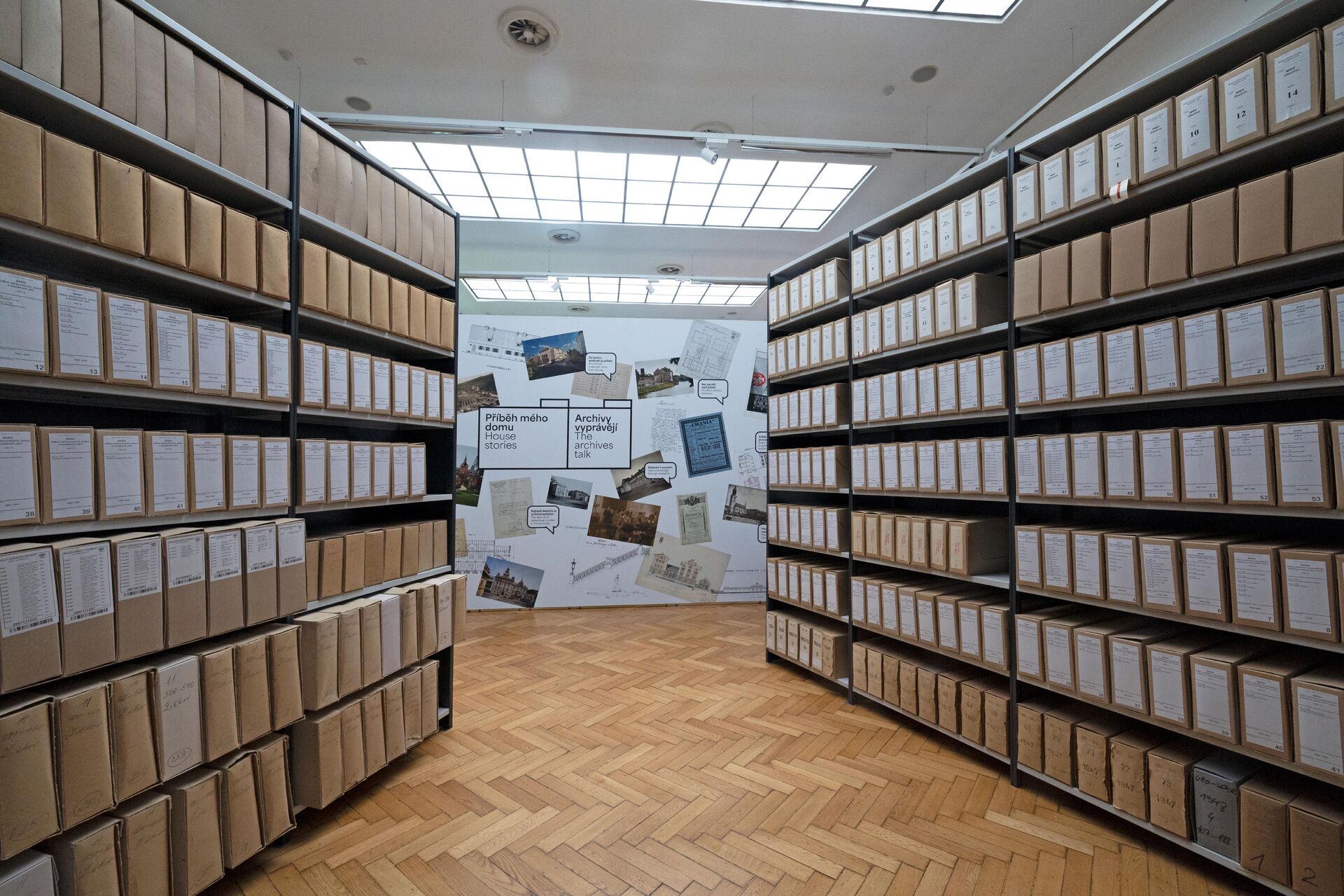
For the exhibition, representative examples of different types of properties were selected and divided into four categories: housing, work, public buildings, and leisure, all located in the Central Bohemian Region. Sixteen objects are presented on exhibition panels — four buildings in each section. A further 29 objects are introduced in the research room, where visitors can take out the relevant box and read a short text, scan a QR code to open a more detailed text in the app, and then view copies of archival materials selected and used by the authors for each object.
Interest in the history of real estate has long been one of the most common research topics in archives and, after genealogy, represents the second main reason why researchers turn to archival institutions. Properties, as material carriers of historical memory, often conceal exceptionally valuable stories, whether in the form of work by notable architects or connections to figures from cultural, political, economic, or regional life.
The exhibition presents different forms of housing in different periods and social settings. From workers’ houses in Martiněves and the poorhouse in Mratín to the tenement house in Mladá Boleslav associated with the family of Adina Mandlová, and the business villa of the Pachl family. It also recalls the overcrowded Wimrovna in Příbram and the experimental houses in Kouřim as examples of different approaches to housing.
The theme of work is represented by industrial and economic buildings. The Podskalský mill in Kolín shows the modernization of traditional production, while the RUPA factory in Modřany illustrates the development of industry and its nationalization. The farmstead in Měšice documents the interconnection of agriculture, administration, and working facilities.
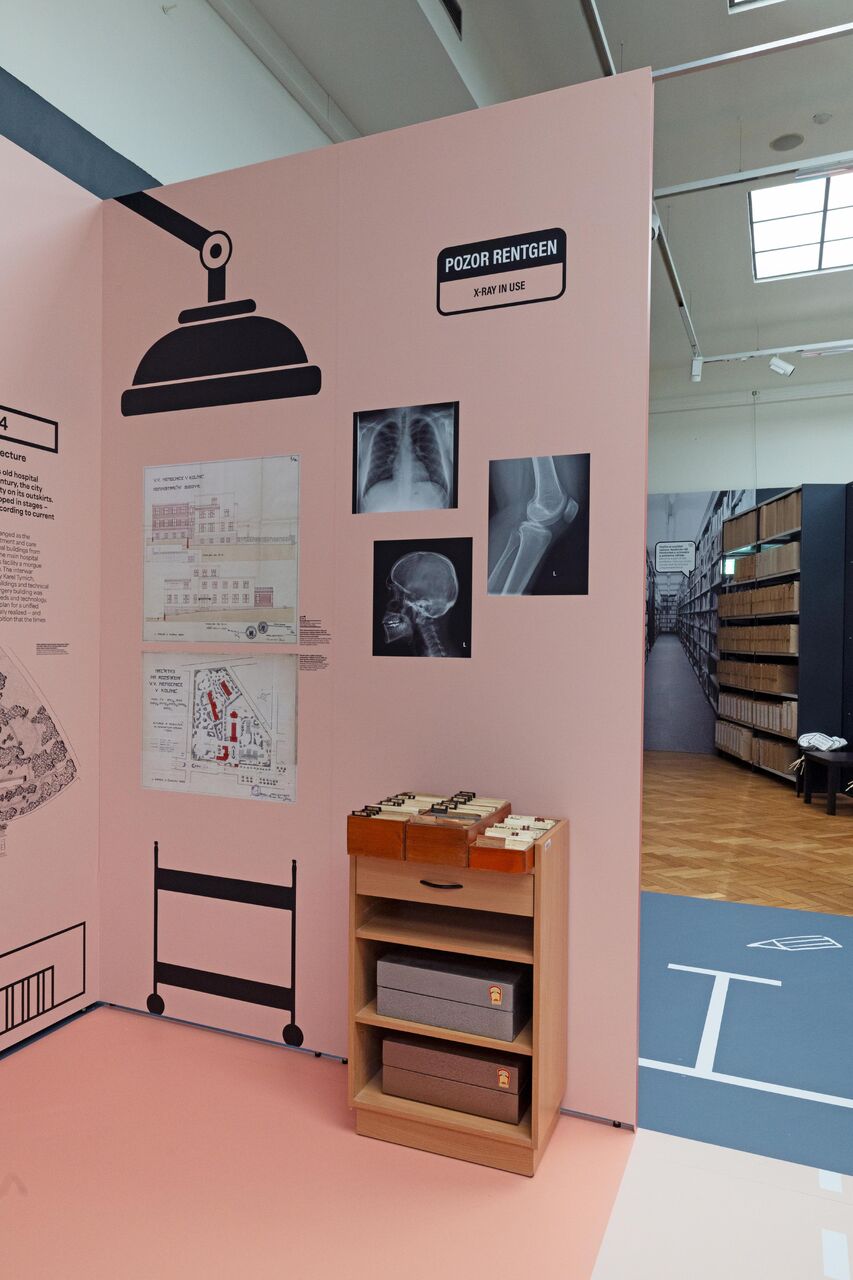
Public buildings illustrate how society functioned at the time. The town hall in Kolín represents municipal administration, the hospital the development of healthcare, and the schools modern education. Churches, the Hus Hall, and the Sokol hall represent buildings where spiritual and civic life took place, while the synagogue in Příbram recalls a vanished chapter of history.
The theme of leisure is reflected in buildings intended for culture and entertainment. The Modrý kříž cinema shows the rise of film, the theatre in Kolín public cultural initiative, and the Sokol hall in Rakovník civic life. The municipal baths in Mšeno then document the development of recreation and hygiene in the interwar period.
Photogallery